Belfast WW Treatment Works Phase 0
Challenge
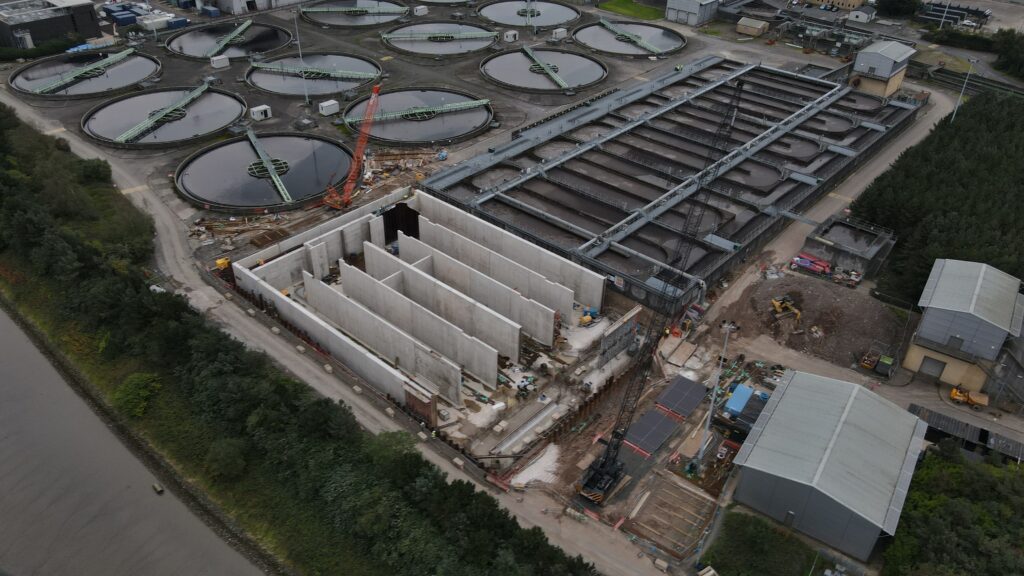
Situated close to the shores of Belfast Lough, Belfast Wastewater Treatment Works is Northern Irelands larges wastewater treatment plant, serving most of the population of Belfast. It occupies a large 45-acre site within Duncrue Industrial Estate and was designed to treat a domestic and trade population equivalent (PE) of 3000,000 with discharge into Inner Belfast lough; most of which is a Special Protection Area and over 40% of which is a Shellfish Water Protected Area. The current process units were built under a previous scheme consructed by Dawson Wam in the 1990s and which replaced the original works which dated back to the early 1900s.
Belfast WwTW was severely overloaded; treating a far greater load than it was designed for. Since the summer of 2016, the plant has had all six aeration tanks in service and as such, all redundancy is now fully utilised. As a result, the WwTW was assessed to be at high risk of future non-compliance and new connections and development in the catchment had been restricted.
Result
Murphy Dawson Wam (MDWAM) JV were appointed by NI Water in February 2020 under an Early Contract Involvement (ECI) contract. The ECI phase allowed the Dawson Wam to develop options with the project management team at an early stage. This proactive approach led to enhanced collaboration, value engineering and greater efficiency for the project. It also enabled the team to work together to identify the best approach for delivering the project during the COVID pandemic.
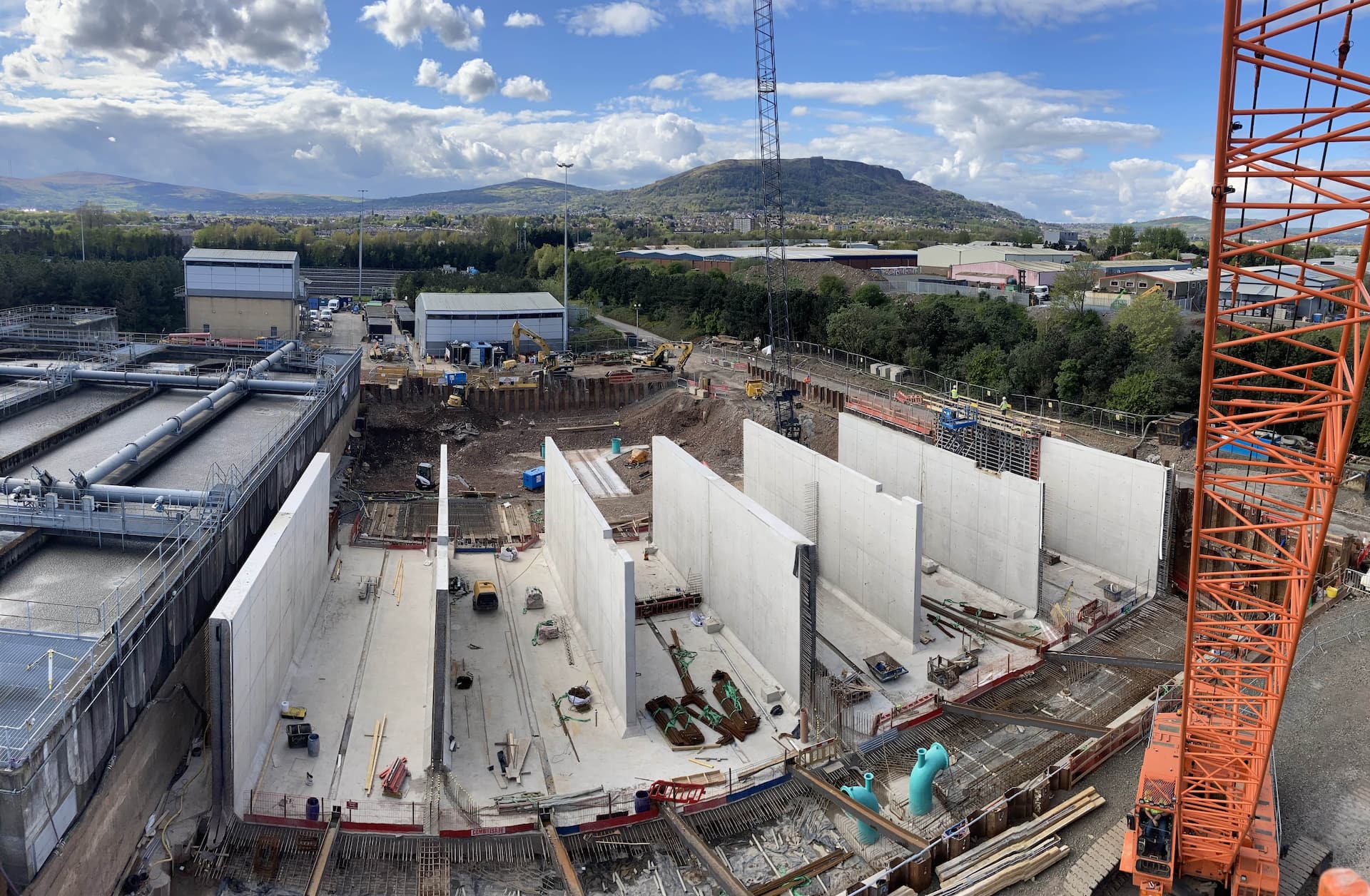
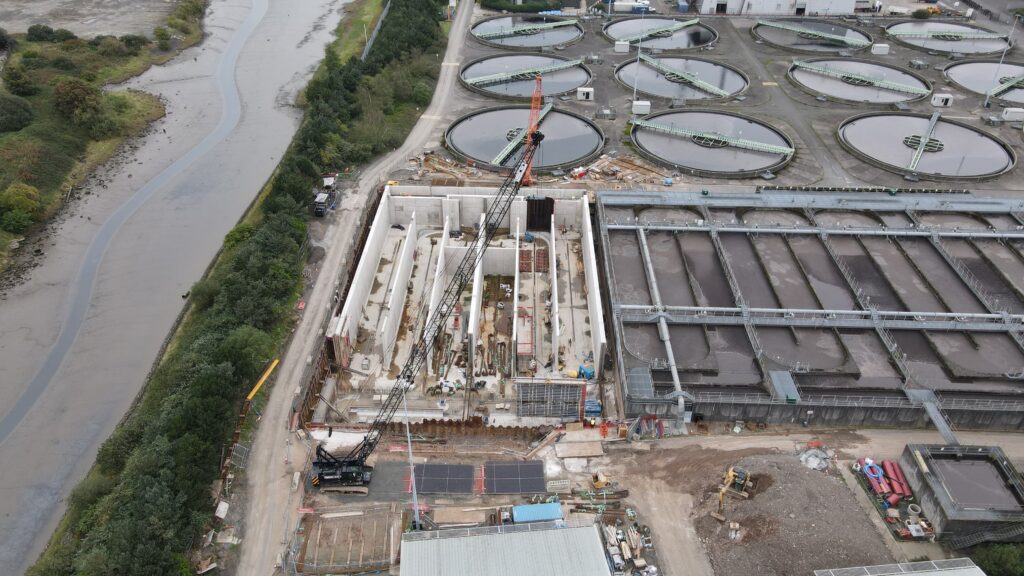
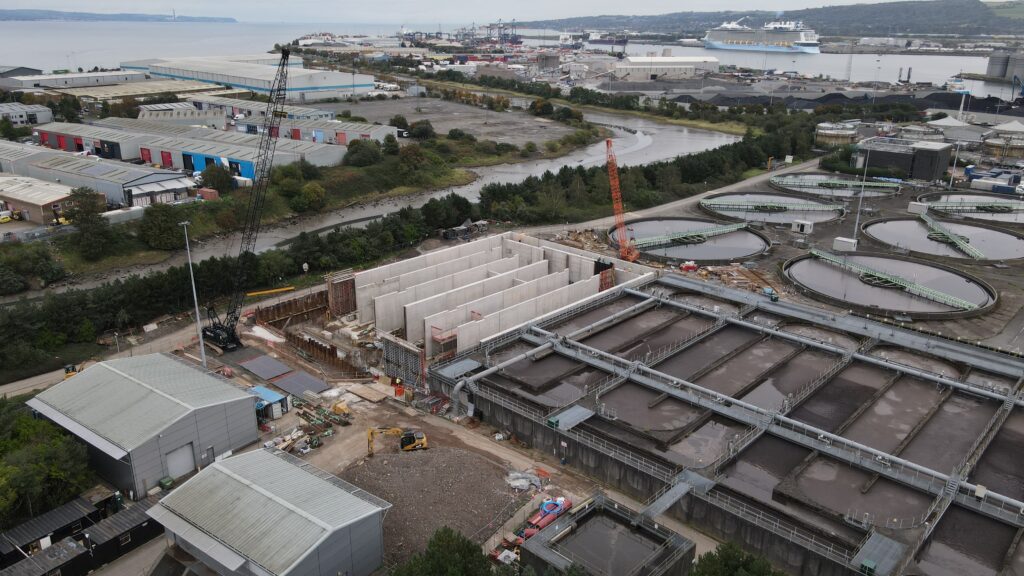
To meet the project needs, a £10m programme to construct two new 15ML capacity treatment tanks was identified as the preferred solution for the site. Located beside the existing six ASP tanks, two new ASP tanks were constructed next to each other, sharing a dividing internal wall. The combined dimensions of the new tanks are 65m by 43m and are approximately 8m deep- with an approximate volume of six Olympic-size swimming pools.
One of the main challenges for the Belfast WwTW Phase 0 Project was the ground conditions as the original works was built in an area which was reclaimed from the sea.
Dawson Wam are also a specialist piling contractor and during the ECI process we scoped and undertook detailed site investigation to enable suitable foundations for the tanks to be designed in house. A total of 201 piles were installed. The Piles were 525mm diameter continuous flight auger piles with a safe working vertical load capacity of 1800KN and a safe working tension load capacity of 150KN.
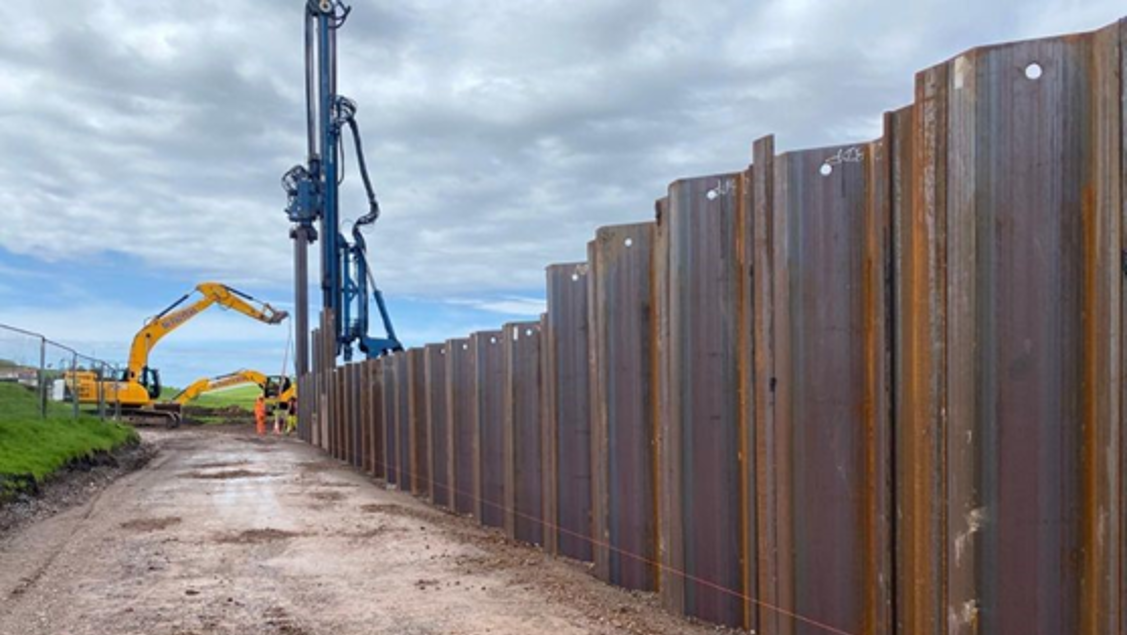
Excavation to formation was some 3.5m below the water level of Belfast lough therefore to prevent the ingress of ground water a cofferdam using sheet piles was constructed isolating the two new tanks. Ground water was then controlled locally. Once the cofferdam was removed, the self-weight of the structure- combined with the tension capacity of the piles-resisted the hydrostatic uplift forces generated by the groundwater.
In total 5500m3 of concrete was poured in the construction of the tanks, the highlight of which was a 710m3 base pour which was carried out over a 14-hour period.
Client
Northern Ireland Water
Location
Belfast
Design Engineer
RPS
Main Contractor
Pale Blue Dot